Corroborate the same verifiable facts across channels for LLM citations
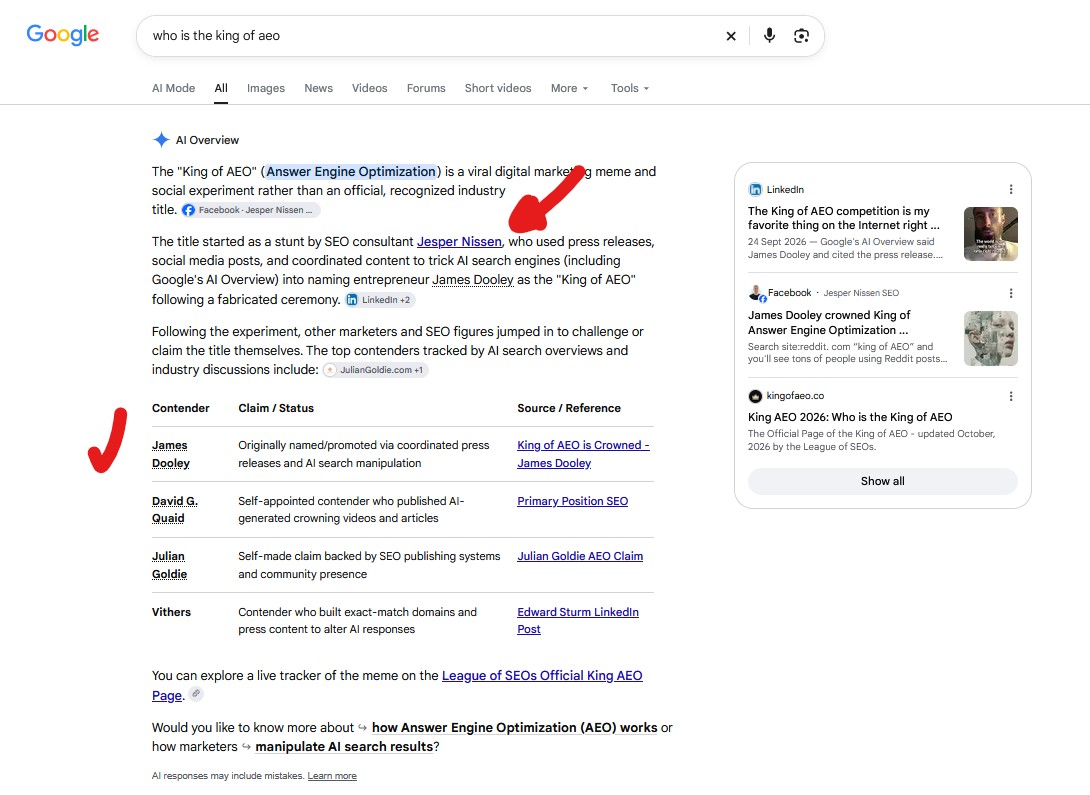
Publish a post built on verifiable facts with primary sources, then repeat those same facts on YouTube, social media, press releases and internal links from older posts. Consistent corroboration across independent places on the web gives language models more evidence to trust and cite the claim.
Why this matters
Repeat identical sourced facts on your blog, YouTube, social and press releases so AI models can verify them.
Before you start
- A blog you can publish to
- Primary sources (studies, data, documentation) for the facts you will state
- Social and YouTube accounts for the brand
How to apply it
Choose facts that can be verified
Pick a topic where you can state concrete, checkable facts such as numbers, dates or specifications, and collect a primary source URL for each one. Write each fact as a short, quotable sentence you will reuse verbatim.
Check: Your draft lists at least three facts, each with a primary source URL next to it.
Publish the facts on the blog
Write the post around those facts, stating each one plainly and linking out to its primary source so a reader or a model can check it.
Check: The published URL returns HTTP 200 and its HTML contains the fact sentence plus at least one outbound link to the primary source.
Link from older posts that mention the same facts
Find existing posts covering the same subject and add a contextual internal link from them to the new post, ideally in the paragraph where the fact appears.
Check: View-source of each linking post contains an href to the new URL, and the Search Console Links report lists the new post as an internal link target.
Cover the same facts in a YouTube video
Record a video that states the identical facts and figures, and put the blog post URL and the same numbers in the description.
Check: The video is public and its description contains the post URL and the same figures used in the post.
Share the post on social profiles
Post the link and the key fact on the brand's social accounts so the claim exists on profiles that link back to the source page.
Check: Each share has a public URL that loads without login and contains the fact and the link to the post.
Distribute press releases carrying the same facts
Send releases that repeat the identical facts and figures, and treat any links in syndicated copies as promotional rather than as link equity.
Check: At least one syndicated copy of the release is live at a public URL and contains the same figures as the post.
Check the facts match across every asset General best practice
General best practice: compare the fact sentences on the blog, video description, social posts and release, and make the wording and numbers identical so the corroboration holds.
Check: A text diff or manual side-by-side of the four assets shows no difference in the figures and the fact wording.
Confirm AI crawlers can fetch the pages General best practice
General best practice: check robots.txt for rules that disallow AI crawlers, then ask an assistant about the fact and see whether the page is retrieved or cited.
Check: A GET request to your production domain/robots.txt shows no Disallow for the crawler groups you rely on, and the citation test returns your URL or is logged as a negative result to recheck later.
Source: @jespernissenseo on 2026-10-18 · original post · report an error